Loading...
What is the Difference Between PVC and CPVC Pipes?
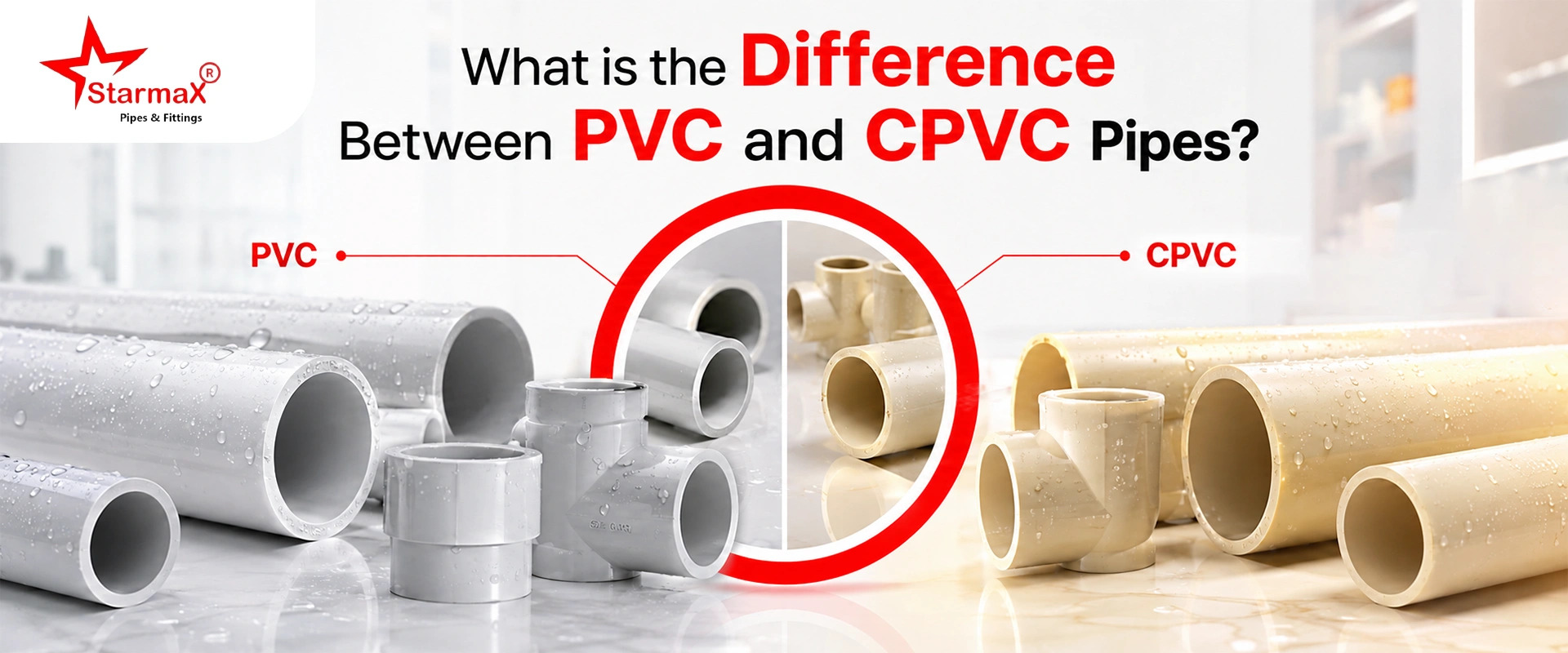
Choosing the right piping material is one of the most important decisions in any residential, commercial, or industrial construction project. In India, PVC and CPVC pipes are among the most widely used plumbing materials due to their durability, affordability, and ease of installation. However, many homeowners, builders, and contractors often struggle to understand the actual difference between PVC and CPVC pipes and which option is best suited for their needs.
While both materials belong to the same family of plastic pipes, they differ significantly in terms of composition, temperature resistance, applications, durability, and cost. Understanding these differences can help you make an informed decision and ensure a reliable plumbing system for years to come.
In this guide, we will explore the key differences between PVC and CPVC pipes, their advantages, disadvantages, applications, and factors to consider before making a choice.
What is PVC Pipe?
PVC stands for Polyvinyl Chloride, a synthetic plastic polymer widely used in plumbing, drainage, irrigation, and construction applications.
PVC pipes are known for their lightweight structure, corrosion resistance, and cost-effectiveness. They are commonly used for transporting cold water and handling drainage systems in residential and commercial buildings.
PVC has been a preferred piping material in India for decades because it offers a long service life and requires minimal maintenance.
Common Uses of PVC Pipes
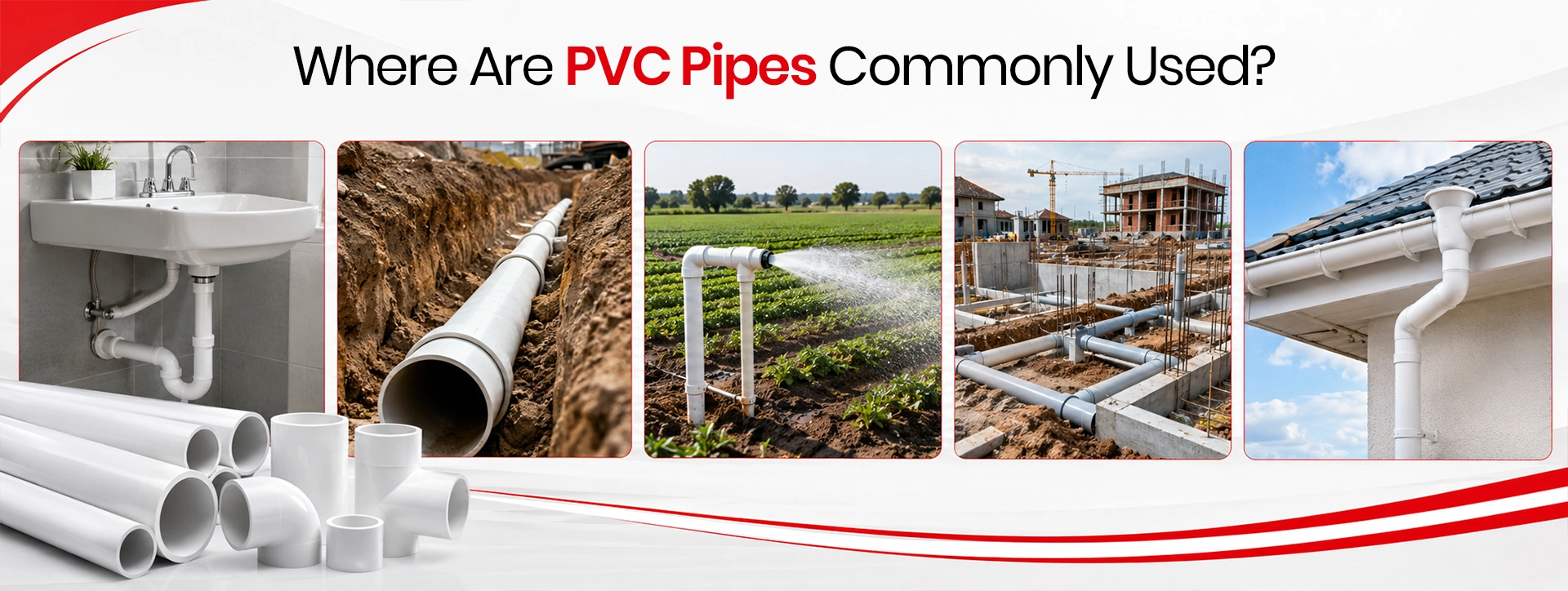
PVC pipes are widely used for:
- Cold water supply systems
- Drainage systems
- Sewage pipelines
- Agricultural irrigation
- Rainwater harvesting systems
- Underground piping
- Ventilation ducts
- Industrial fluid transportation
What is CPVC Pipe?
CPVC stands for Chlorinated Polyvinyl Chloride. It is manufactured by adding extra chlorine to PVC resin through a chlorination process.
This additional chlorination significantly improves the material's ability to withstand high temperatures and pressure. As a result, CPVC pipes are commonly used for both hot and cold water plumbing systems.
Due to their enhanced performance, CPVC pipes have become increasingly popular in modern residential and commercial construction projects across India.
Common Uses of CPVC Pipes
CPVC pipes are commonly used for:
- Hot water supply systems
- Cold water distribution
- Residential plumbing
- Commercial buildings
- Hospitals
- Hotels
- Industrial process piping
- High-temperature fluid transport
PVC vs CPVC Pipes: Quick Comparison
| Feature | PVC Pipes | CPVC Pipes |
| Full Form | Polyvinyl Chloride | Chlorinated Polyvinyl Chloride |
| Color | White, Grey | Cream, Off-White, Light Yellow |
| Temperature Resistance | Up to 60°C | Up to 93°C |
| Hot Water Usage | Not Recommended | Highly Suitable |
| Cold Water Usage | Suitable | Suitable |
| Cost | Lower | Higher |
| Durability | High | Very High |
| Pressure Handling | Moderate | Better |
| Installation | Easy | Easy |
| Corrosion Resistance | Excellent | Excellent |
| Lifespan | Long | Longer |
| Applications | Drainage and Cold Water | Hot and Cold Water Systems |
Main Difference Between PVC and CPVC Pipes
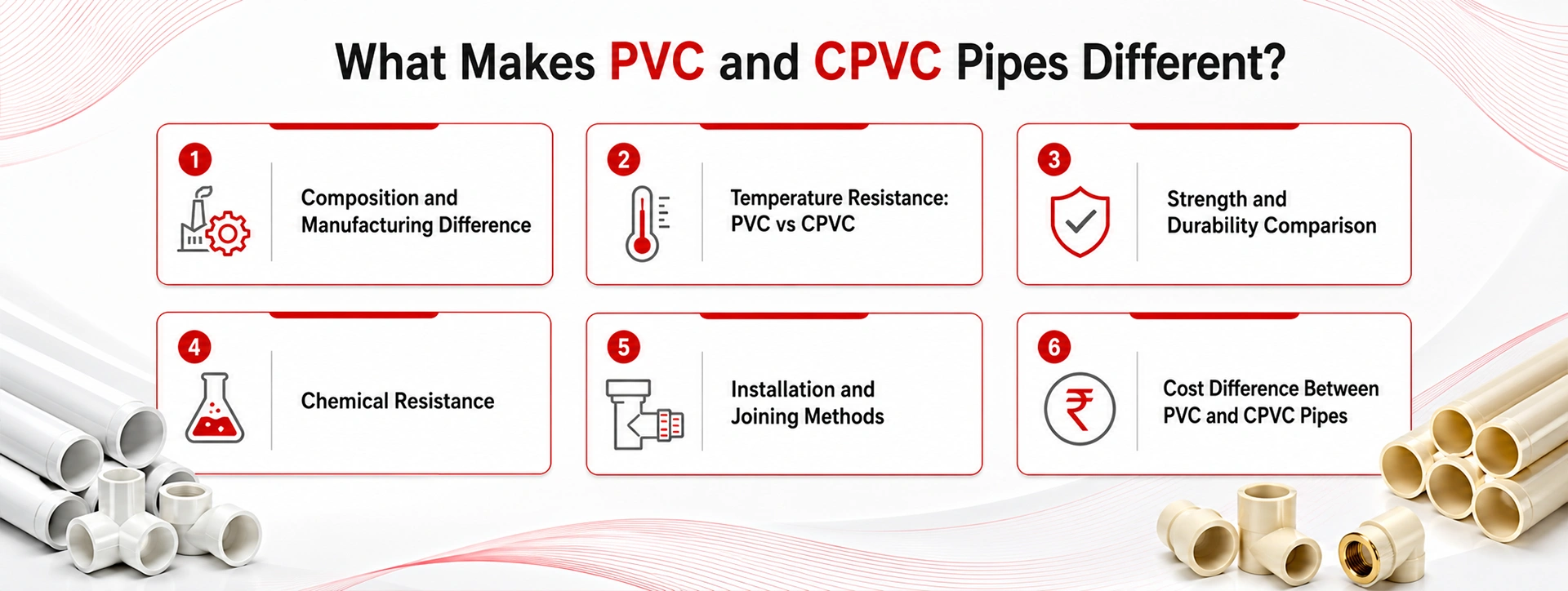
The primary difference between PVC and CPVC pipes lies in their temperature resistance and chemical composition.
PVC pipes are suitable for cold water applications and drainage systems, while CPVC pipes are specifically designed to handle both hot and cold water under higher pressure conditions.
The additional chlorine present in CPVC increases its heat resistance and structural strength, making it more suitable for modern plumbing systems.
Composition and Manufacturing Difference
PVC Composition
PVC is manufactured using:
- Vinyl chloride monomer
- Stabilizers
- Plasticizers
- Additives
These components create a durable and versatile piping material suitable for a wide range of applications.
CPVC Composition
CPVC is produced by chlorinating PVC resin.
This process increases the chlorine content from approximately 57% to around 63–69%, improving:
- Heat resistance
- Chemical resistance
- Fire performance
- Structural integrity
The enhanced properties make CPVC a preferred choice for demanding plumbing environments.
Temperature Resistance: PVC vs CPVC
Temperature resistance is one of the most important differences between these two materials.
PVC Temperature Capacity
PVC pipes typically handle temperatures up to:
60°C (140°F)
Exposure to higher temperatures can:
- Cause softening
- Lead to deformation
- Reduce pipe lifespan
- Increase leakage risks
For this reason, PVC is generally not recommended for hot water systems.
CPVC Temperature Capacity
CPVC pipes can handle temperatures up to:
93°C (200°F)
This makes CPVC ideal for:
- Hot water supply lines
- Geyser connections
- Industrial heating systems
- Commercial plumbing
Strength and Durability Comparison
Both materials offer excellent durability, but CPVC generally provides superior performance under demanding conditions.
PVC Durability
PVC pipes offer:
- High impact resistance
- Corrosion resistance
- Chemical resistance
- Long service life
Under normal conditions, PVC pipes can last for several decades.
CPVC Durability
CPVC pipes provide:
- Better heat resistance
- Improved pressure handling
- Greater structural stability
- Longer service life in hot water systems
Because of these advantages, CPVC is often preferred for modern plumbing installations.
Chemical Resistance
Both PVC and CPVC are highly resistant to corrosion and many chemicals.
PVC Chemical Resistance
PVC performs well against:
- Acids
- Alkalis
- Salts
- Wastewater
This makes it suitable for industrial and drainage applications.
CPVC Chemical Resistance
CPVC offers enhanced resistance to:
- Corrosive chemicals
- Industrial fluids
- Hot chemical solutions
As a result, CPVC is widely used in chemical processing industries.
Installation and Joining Methods
Both PVC and CPVC pipes are relatively easy to install.
PVC Installation
PVC pipes are joined using:
- Solvent cement
- Couplings
- Fittings
- Adhesive bonding
Installation is quick and cost-effective.
CPVC Installation
CPVC uses:
- Specialized fittings
- Secure bonding methods
Although the installation process is similar, CPVC requires compatible fittings and adhesives specifically designed for high-temperature applications.
Cost Difference Between PVC and CPVC Pipes
Cost is often a major factor for homeowners and builders.
PVC Pipe Cost
PVC pipes are generally:
- More affordable
- Widely available
- Economical for large projects
This makes PVC a popular choice for drainage and irrigation systems.
CPVC Pipe Cost
CPVC pipes usually cost more because:
- Manufacturing is more complex
- Heat-resistant properties are enhanced
- Performance levels are higher
While the initial investment is greater, CPVC often provides better long-term value for hot water plumbing.
Applications of PVC Pipes
PVC pipes are commonly used in:
Residential Projects
- Drainage systems
- Rainwater systems
- Outdoor plumbing
Agriculture
- Irrigation pipelines
- Water transportation systems
Commercial Buildings
- Sewage systems
- Wastewater management
Industrial Facilities
- Chemical transport
- Ventilation systems
Applications of CPVC Pipes
CPVC pipes are widely used in:
Residential Plumbing
- Hot water lines
- Cold water lines
- Kitchen plumbing
- Bathroom plumbing
Commercial Projects
- Hotels
- Hospitals
- Schools
- Shopping malls
Industrial Applications
- High-temperature fluid transport
- Chemical processing
- Manufacturing facilities
Advantages of PVC Pipes
- Cost-Effective: PVC remains one of the most affordable plumbing materials available.
- Lightweight: Easy transportation and installation reduce labor costs.
- Corrosion Resistant: PVC does not rust like metal pipes.
- Low Maintenance: Minimal maintenance requirements reduce long-term costs.
- Long Service Life: Properly installed PVC systems can last for decades.
Advantages of CPVC Pipes
- Excellent Heat Resistance: Suitable for hot water applications.
- Superior Strength: Handles higher pressure and temperature.
- Longer Lifespan: Offers extended durability in demanding environments.
- Better Water Quality: Smooth interiors help maintain water purity.
- Fire Resistance: Improved fire-retardant properties compared to standard PVC.
Disadvantages of PVC Pipes
- Not suitable for hot water supply.
- May deform under excessive heat.
- Limited temperature tolerance.
- Less suitable for high-pressure hot fluid applications.
Disadvantages of CPVC Pipes
- Higher initial cost.
- Slightly more expensive fittings.
- Requires proper installation techniques.
- Greater material expense for large projects.
Which Pipe is Better: PVC or CPVC?
The answer depends on the intended application.
Choose PVC pipes if you need:
- Drainage systems
- Irrigation networks
- Sewage lines
- Cold water transportation
- Budget-friendly solutions
Choose CPVC pipes if you need:
- Hot water plumbing
- Residential water supply
- Commercial plumbing systems
- High-temperature applications
- Long-term durability
For most modern homes in India, CPVC is generally considered the better option for internal water supply systems because it can safely handle both hot and cold water.
Factors to Consider Before Choosing
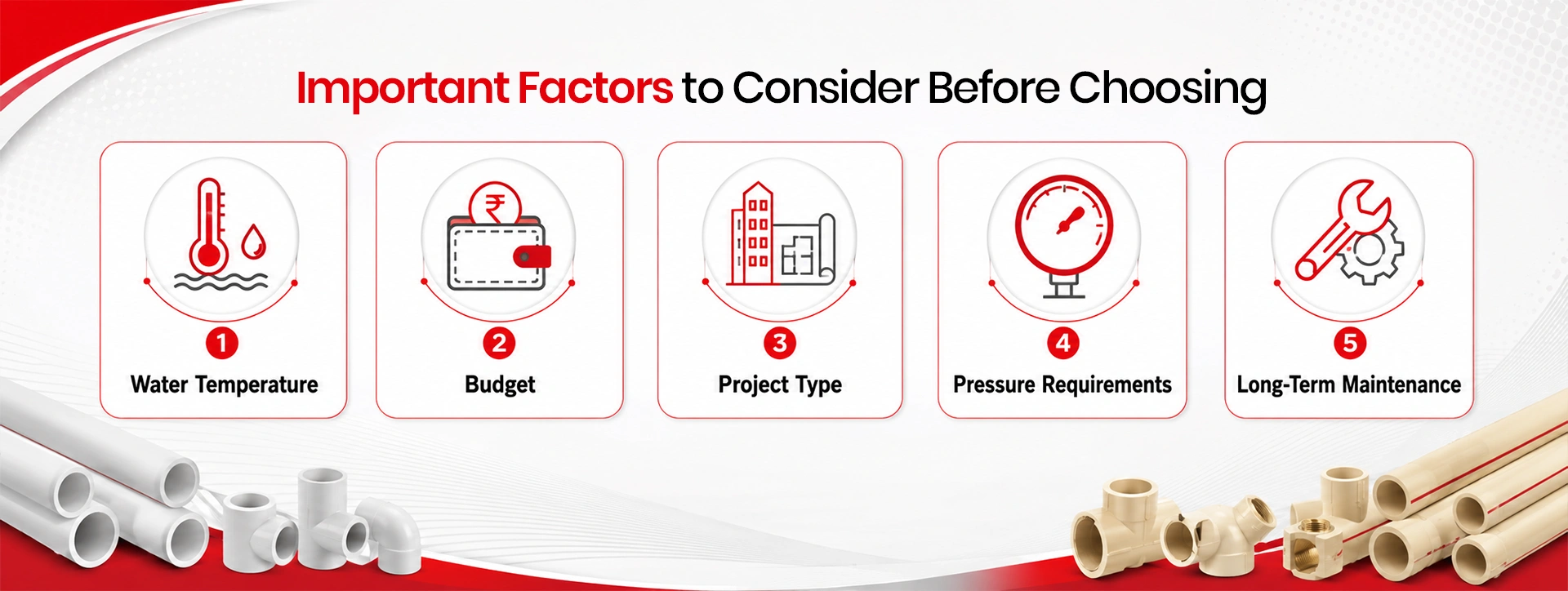
Before selecting between PVC and CPVC pipes, evaluate:
- Water Temperature: Hot water requires CPVC.
- Budget: PVC is more economical.
- Project Type: Residential plumbing usually benefits from CPVC.
- Pressure Requirements: Higher pressure systems may perform better with CPVC.
- Long-Term Maintenance: Consider lifecycle costs rather than just initial expenses.
Conclusion
Understanding the difference between PVC and CPVC pipes is essential for making the right plumbing decision. While both materials offer excellent corrosion resistance, durability, and ease of installation, their suitability depends largely on the intended application.
PVC pipes are ideal for drainage systems, irrigation projects, and cold water supply due to their affordability and reliability. CPVC pipes, on the other hand, are specifically designed for hot and cold water plumbing and provide superior heat resistance, strength, and long-term performance.
For homeowners, builders, and contractors in India, selecting the right piping material can improve system efficiency, reduce maintenance costs, and ensure a longer-lasting plumbing infrastructure. By understanding the strengths and limitations of each option, you can confidently choose the pipe that best meets your project's requirements.
Frequently Asked Questions
1. What is the difference between PVC and CPVC pipes?
Most new plumbing applications require CPVC over PVC. CPVC can be used for both hot and cold water, it can cope with water temperatures of up to 93°C and is more durable and flexible. If you need a source of cold water, drainage or irrigation only, PVC is more cost effective and viable.
2. Which is better for home plumbing: PVC or CPVC?
CPVC is lead free, safe, and can be used with hot or cold water and is better for water supply systems, particularly for drinking water. PVC can only be used for cold water supply. CPVC is always recommended for any water supply system for residential or commercial use.
3. Can CPVC pipes be used for cold water?
Yes, CPVC can easily be used for cold water. CPVC pipes are designed to be used for hot water or cold water. Whether it's a cold water supply or hot water plumbing, CPVC does a great job in both situations, thus it is a complete plumbing solution.
4. Why is CPVC more expensive than PVC?
PVC offers lower costs than CPVC. PVC pipes are cheaper due to a simpler manufacturing process. CPVC, however, is a bit more costly as a result of its additional chlorination process that provides higher temperature resistance and durability. CPVC is more cost effective in the long term.
5. Can you use PVC pipe for hot water?
No, PVC pipe cannot be used for hot water. Standard PVC pipes can only handle temperatures up to 60°C. If you use PVC for hot water, the pipe will soften, warp, and leak. For hot water applications, you must use CPVC pipes, which are engineered to withstand temperatures up to 93°C.

Related Blog

WHY STARMAX ?
MAKE IN INDIA- BEST QUALITY PRODUCTS UNDER THE MISSION MAKE IN INDIA
BEST QUALITY PRODUCTS- All products are certified and manufactured as per ASTM standards.
HIGHEST SATISFACTION We assure the customers for 100% statisfaction in terms of price and quality
BEST BUSINESS STANDARDS- we have the mission of providings the products in best business standards i.e.
Free! Get A Quote

"Starmax" is a brand launched by "Naira Group" offering a wide range of CPVC & UPVC pipes and fittings. We are based in India ka Dil- Dilli CHAWRI BAZAR (Delhi).
Our Product
CPVC Pipes and Fittings UPVC Pipes PTMT Taps UPVC Fitting System PVC Plastic Tap Solvent Cement Clampes BrochureContact Us
Mr. Sumit Gupta
Address
3348/1, Gali Peepal Mahadev, Chawri Bazar, Delhi-110006
© 2026 Starmax Pipes. All Rights Reserved.
