Loading...
What Causes CPVC Pipes to Leak? Common Reasons and Prevention Tips
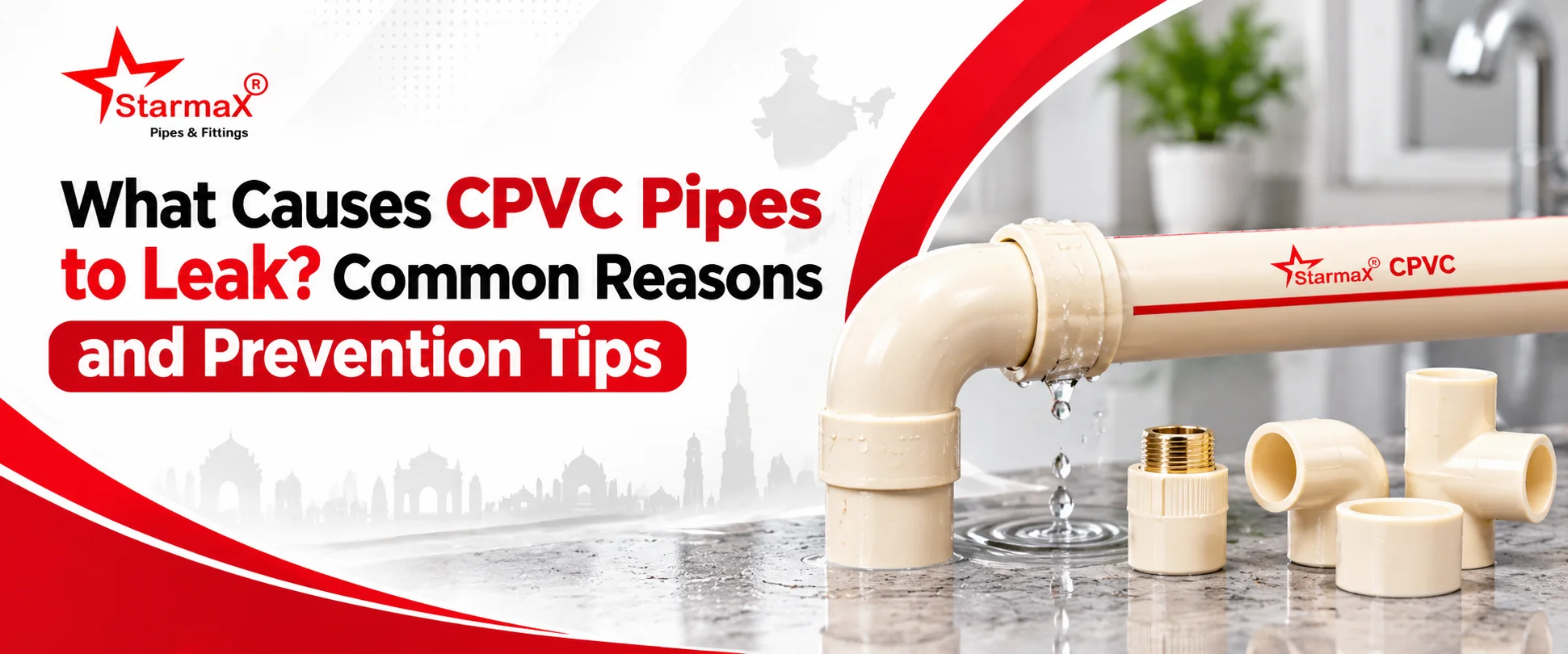
A damp patch appears beside your bathroom wall. A week later, water starts dripping from a CPVC elbow. Is the pipe defective, or did something go wrong during installation? CPVC pipes are widely used in plumbing because of their heat resistance, corrosion resistance, and suitability for hot and cold water applications. These advantages of cpvc pipes make them a practical choice for many plumbing systems. However, poor joints, excess pressure, chemical contact, and physical strain can still cause leaks. The trouble is that the wet spot rarely tells you the whole story. A leak at a fitting may begin with an installation mistake made months earlier. This guide explains the common causes of CPVC pipe leaks, how to spot warning signs, and what helps prevent costly repairs.
What Are the Most Common Causes of CPVC Pipes to Leak?
The most common CPVC pipe leakage causes include incorrect solvent cement application, incompatible chemicals, temperature changes, excessive water pressure, poor pipe support, and physical damage. These problems can weaken joints or create cracks that allow water to escape. Let's look at how each problem starts and what you can do to prevent it.
1. Incorrect Solvent Cement Application
A leaking CPVC joint often points to a problem during installation. CPVC pipes use solvent cement to form a strong bond between the pipe and fitting. However, that bond may fail if the installer uses the wrong cement, leaves dirt on the surfaces, or joins the parts after the cement has dried. The problem can become worse during hot weather because solvent cement evaporates faster.
How to prevent it: Use manufacturer-approved CPVC solvent cement. Clean and prepare both surfaces, apply the cement as directed, and join the parts while it remains wet. Allow the required curing time before pressurising the system.
2. Chemical Exposure and Stress Cracking
Not every substance used around plumbing is compatible with CPVC. Certain sealants, lubricants, adhesives, and other construction chemicals can damage the material. When chemical exposure combines with stress inside the pipe, cracks may develop. This process is known as environmental stress cracking. For example, an unsuitable sealant used near a fitting may gradually damage the material, even when the pipe itself was installed correctly.
How to prevent it: Check the pipe manufacturer's chemical compatibility guidance before applying nearby construction products. Use compatible thread sealants, firestopping materials, and lubricants rather than assuming all products are safe for CPVC.
3. Thermal Expansion and Contraction
CPVC pipes expand when heated and contract when they cool. This is especially important in hot water lines. A long pipe installed tightly between two fixed points may have little room to move. Over time, repeated temperature changes can place stress on joints, elbows, and other fittings. Eventually, that stress may contribute to leakage.
How to prevent it: Allow for thermal movement during installation. Long pipe runs may need expansion loops, offsets, or suitable guides. Follow the manufacturer's instructions rather than fastening every support tightly around the pipe.
4. High Water Pressure and Water Hammer
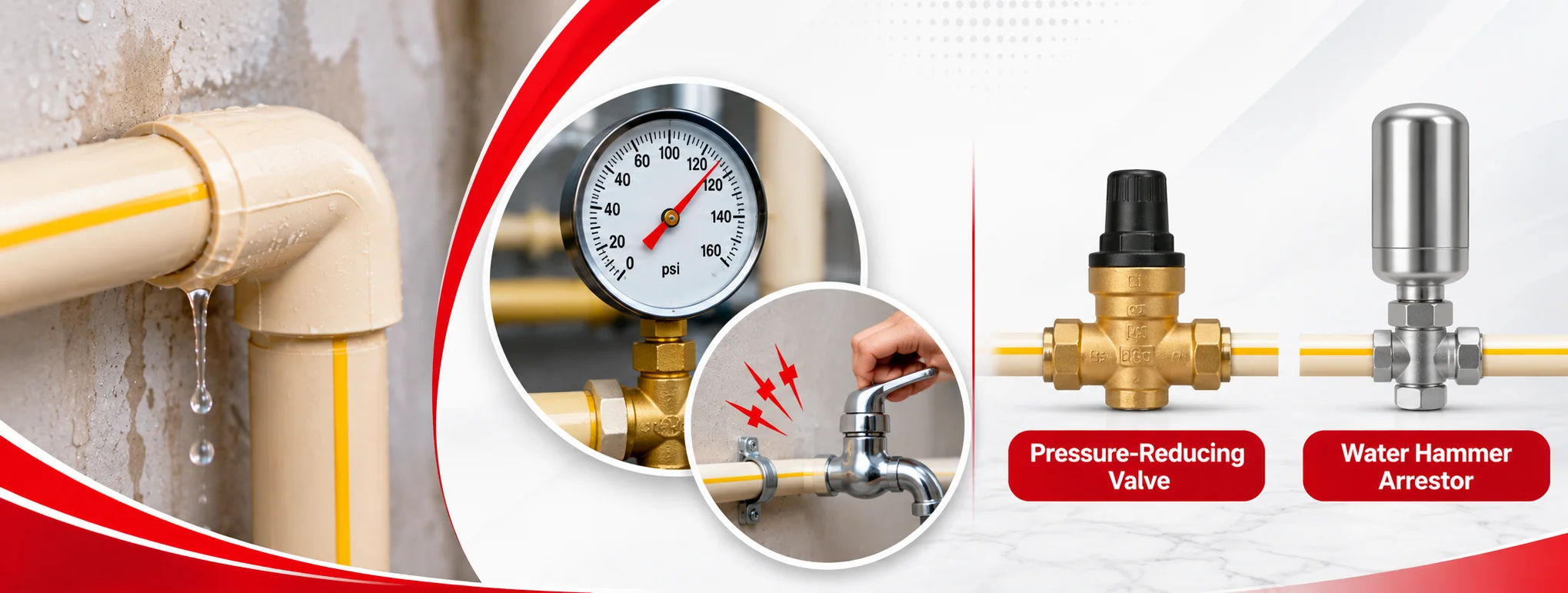
Water pressure is another common reason plumbing systems develop leaks. If pressure exceeds the pipe system's rated limits, pipes and fittings can experience excessive stress. Then there's water hammer. Have you ever heard a loud knocking sound when someone quickly closes a tap? That noise may indicate a sudden pressure surge in the plumbing system. Repeated surges can strain joints and fittings.
How to prevent it: Check the operating pressure and use suitable pressure-control equipment where necessary. A plumber may recommend a pressure-reducing valve or water hammer arrestor after assessing the system. Remember that a pipe's allowable pressure can decrease as water temperature increases.
5. Poor Pipe Support and Physical Damage
CPVC pipes need proper support, particularly along long horizontal runs. If supports are too far apart, a water-filled pipe may sag. This places extra load on joints and fittings. However, supports can also cause problems when they are too tight or have sharp edges. Other common mistakes include forcing pipes into position, striking them during construction, and using damaged cutting tools.
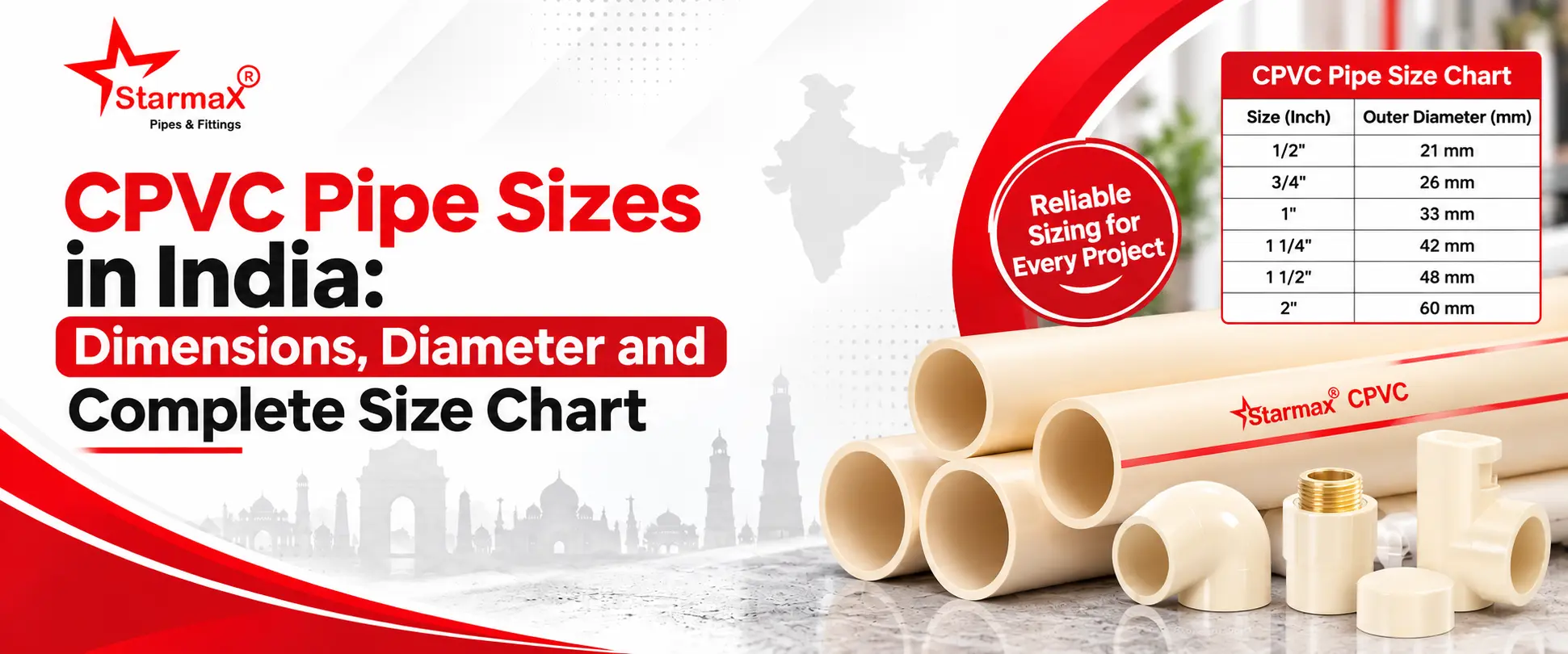
How to prevent it: Follow the recommended support spacing and use smooth, compatible clamps. Also, choose the correct CPVC Pipe Sizes according to the plumbing layout, water flow requirements, and manufacturer's specifications. Keep pipes away from sharp objects and avoid forcing connections into alignment. Inspect every pipe and fitting for cracks before installation.
6. Temperature, Age, and Environmental Conditions
CPVC is designed for suitable hot and cold water applications, but every pipe system has operating limits. Prolonged exposure to temperatures beyond those limits can affect performance. Likewise, strong sunlight, improper storage, chemical contact, or repeated physical stress may contribute to damage.
However, discolouration alone does not prove that a CPVC pipe has failed. And there is no single age at which every CPVC pipe becomes brittle or starts leaking.
How to prevent it: Use pipes within their rated conditions, follow storage and handling guidance, and inspect accessible lines for cracks, damaged fittings, and other signs of deterioration.
How Can You Identify the Cause of a CPVC Pipe Leak?
Finding water is usually easier than finding the reason it escaped. A damp patch around an elbow might suggest a joint problem. However, water can also travel along the pipe before dripping from another point.
The Leak Location Test
Use the location of the leak as a starting clue.
| Where You Notice Water | Possible Cause to Investigate |
|---|---|
| Around an elbow or tee | Weak solvent-weld joint or fitting stress |
| Along a straight pipe | Crack, impact damage, or excessive strain |
| Near a pipe clamp | Abrasion, tight support, or restricted movement |
| Around a threaded fitting | Assembly problem or unsuitable thread sealant |
| Near a previous repair | Failed repair or unresolved pressure or movement problem |
These are possible causes, not confirmed diagnoses. For concealed plumbing, warning signs include damp walls, peeling paint, water stains, and an unexplained drop in pressure.
If the leak is hidden, ask a plumber to locate the affected section before opening walls or replacing materials. The important question isn't simply where the leak appeared. It's what caused the pipe or joint to fail.
How Can You Prevent CPVC Pipe Leakage During Installation?
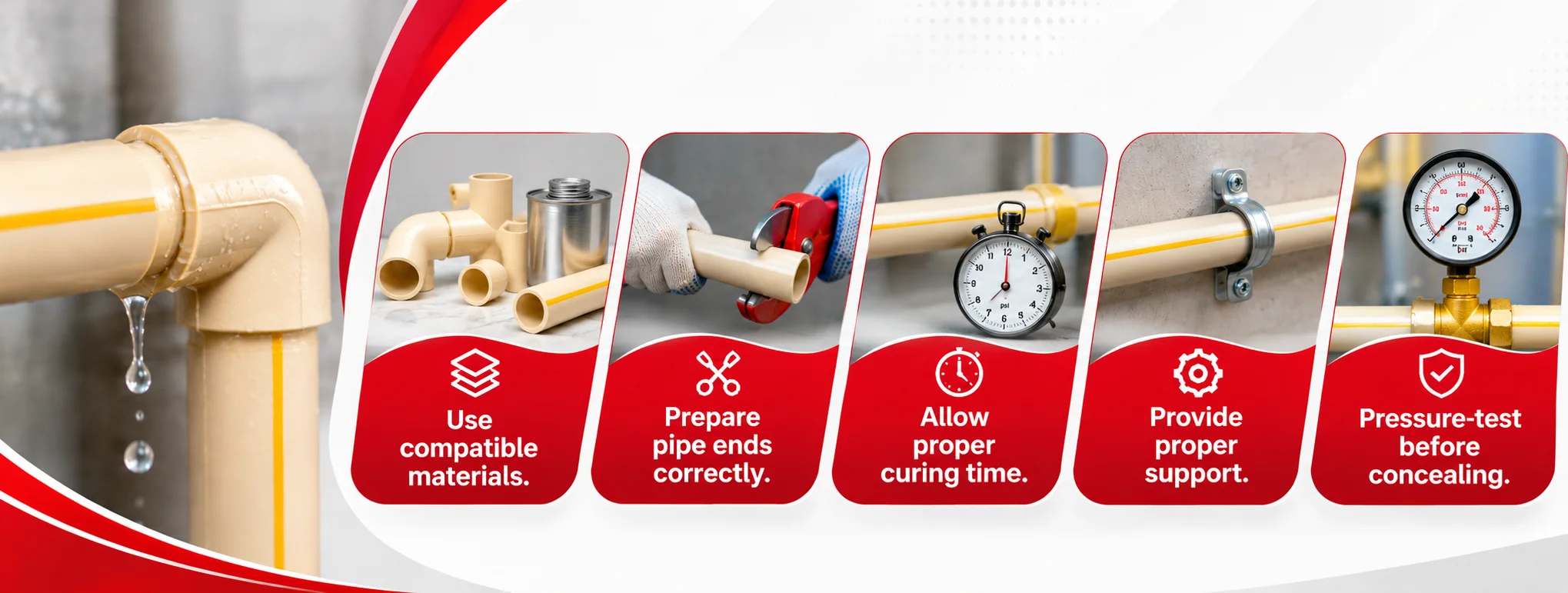
Many CPVC leaks can be avoided by following the correct installation procedure. These five checks are especially important.
1. Choose compatible materials. Match CPVC pipes with suitable CPVC Pipe Fittings and manufacturer-approved solvent cement to ensure proper connections. Do not assume that a product designed for UPVC will work for CPVC.
2. Prepare pipe ends correctly. Make square cuts, remove burrs, and chamfer the edges as instructed. Dirt, moisture, and uneven cuts can interfere with proper bonding.
3. Allow sufficient curing time. Don't fill or pressurise the system immediately after joining. Cure times depend on the product, pipe size, and conditions.
4. Provide proper support and movement. Follow the recommended bracket spacing and allow for expansion in hot water lines.
5. Pressure-test before concealing pipes. Test the completed system using the manufacturer's procedure and applicable plumbing requirements.
The last check is particularly useful during new construction. Finding a weak joint before the wall is finished is far easier than discovering it after the bathroom tiles are installed.
What Should You Do When a CPVC Pipe Starts Leaking?
First, shut off the affected water supply. If water is reaching electrical equipment, keep clear of the hazard and arrange safe isolation. Once the area is safe, identify whether the leak is coming from a joint, threaded connection, or damaged pipe section.
A qualified plumber can then assess the repair. For a cracked pipe, the damaged section may need to be cut out and replaced with compatible pipe and fittings. For a leaking solvent-welded joint, adding another coat of cement to the outside is not a reliable repair. The affected connection may need replacement. During the repair, the installer should use clean cuts, approved materials, and the correct joining method. Finally, allow the joint to cure and test the system before restoring normal use.
Don't rush the repair simply because the visible leak has stopped. The pipe must be able to handle normal operating pressure again.
When Should You Replace a CPVC Pipe Instead of Repairing It?
A local repair may be enough when one fitting has failed and the surrounding pipe remains in good condition. However, replacement deserves consideration when you find several cracks, extensive physical damage, or repeated leaks across the same plumbing system.
For instance, replacing one elbow may not solve the problem if excessive water pressure is damaging several joints. Likewise, chemical exposure may affect more than the section where the first crack appears.
A plumber should inspect the surrounding material and identify the likely cause before deciding how much pipework needs replacement. That assessment can prevent another repair a few weeks later.
Conclusion
CPVC pipes can develop leaks because of poor joints, incompatible chemicals, temperature changes, excess pressure, or physical stress. However, many of these problems can be prevented through correct installation and regular checks.
Use compatible materials, follow the manufacturer's instructions, and investigate the cause of repeated leaks instead of treating every drip as an isolated problem. Good plumbing depends on the whole system, not just the pipe.
Frequently Asked Questions
Q1. Why Does a CPVC Pipe Leak at the Joint?
A CPVC joint may leak because of incorrect solvent cement, dirty surfaces, poor fitting alignment, or insufficient curing time. Stress from pressure or temperature changes can also affect connections. A plumber should inspect the joint before deciding on replacement.
Q2. Can High Water Pressure Cause CPVC Pipes to Burst?
Yes. Pressure above the system's rated limits can damage CPVC pipes or fittings. Sudden pressure surges may also strain connections. Check the pressure rating at the operating temperature and have a plumber assess recurring pressure problems.
Q3. Can You Repair a Leaking CPVC Pipe Without Replacing It?
Sometimes a local fitting or connection can be repaired by replacing the affected components. However, a cracked pipe usually needs removal of the damaged section. Simply coating the outside of a leak with solvent cement is not a dependable solution.
Q4. Does Hot Water Cause CPVC Pipes to Crack?
CPVC is designed for suitable hot water use. However, temperatures beyond its rated limits or poorly managed thermal expansion can cause stress and damage. Follow the manufacturer's operating limits and installation guidance.
Q5. Can You Use UPVC Solvent Cement on CPVC Pipes?
Do not substitute ordinary UPVC solvent cement for CPVC solvent cement unless the product manufacturer explicitly approves it for the CPVC system and service conditions. Use the specified joining materials to achieve a suitable, reliable connection.
Q6. How Can You Tell If a CPVC Pipe Is Damaged Inside a Wall?
Common warning signs include damp patches, peeling paint, water stains, mould growth, and unexplained changes in water pressure. These symptoms do not always prove a CPVC leak, so proper leak detection is important before opening the wall.

Related Blog
WHY STARMAX ?
MAKE IN INDIA- BEST QUALITY PRODUCTS UNDER THE MISSION MAKE IN INDIA
BEST QUALITY PRODUCTS- All products are certified and manufactured as per ASTM standards.
HIGHEST SATISFACTION We assure the customers for 100% statisfaction in terms of price and quality
BEST BUSINESS STANDARDS- we have the mission of providings the products in best business standards i.e.
Free! Get A Quote

"Starmax" is a brand launched by "Naira Group" offering a wide range of CPVC & UPVC pipes and fittings. We are based in India ka Dil- Dilli CHAWRI BAZAR (Delhi).
Our Product
CPVC Pipes and Fittings UPVC Pipes PTMT Taps UPVC Fitting System PVC Plastic Tap Solvent Cement Clampes BrochureContact Us
Mr. Sumit Gupta
Address
3348/1, Gali Peepal Mahadev, Chawri Bazar, Delhi-110006
© 2026 Starmax Pipes. All Rights Reserved.
