Loading...
Which Pipe Is Best for Water Supply? UPVC, CPVC, PPR & HDPE
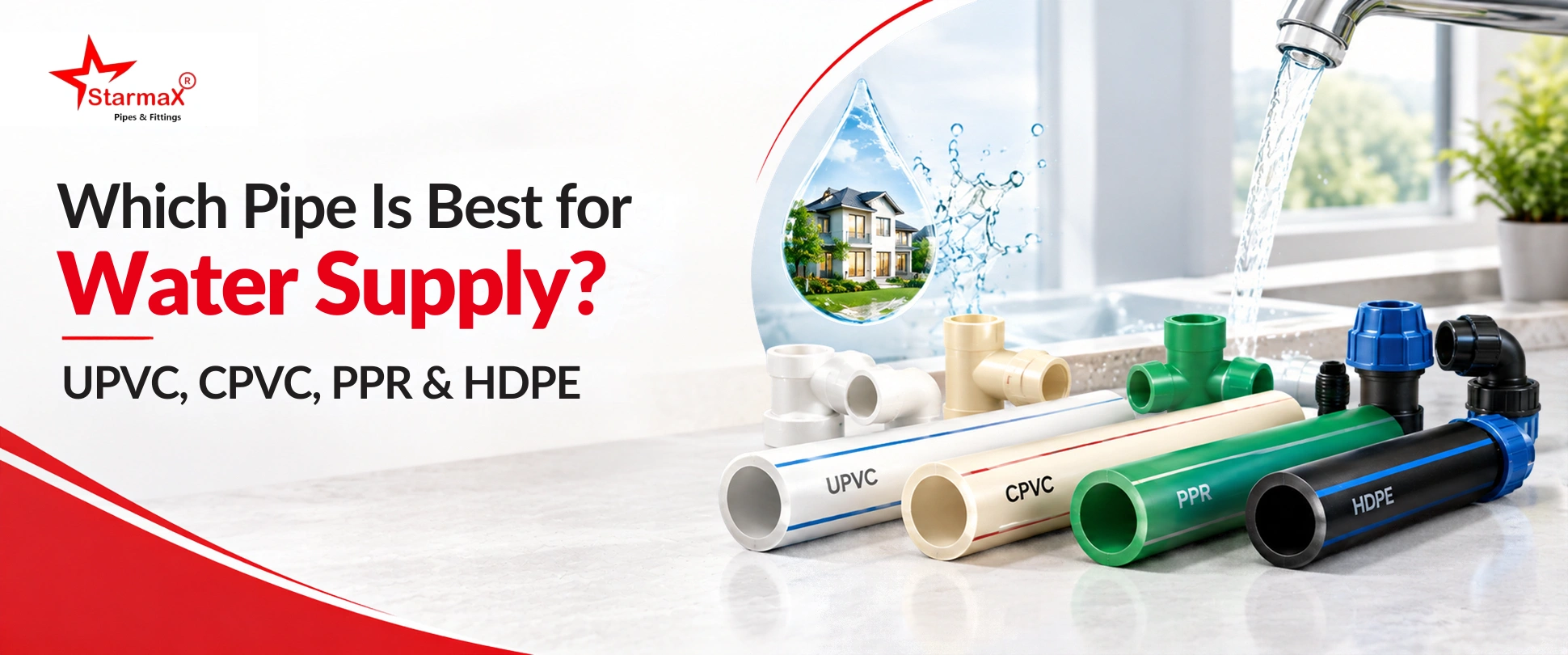
Choosing the right pipe for water supply is one of those decisions that people rarely bother about - till something breaks. The broken pipes, leaking joints or rusted water - all these issues are not only inconvenient but very costly to repair.
If you are building a new house, refurbishing an old one or upgrading your plumbing system, the choice of the right pipe will determine the quality of the water and durability of your plumbing system.
Today in India, there are various types of pipes available - CPVC, UPVC, PPR, HDPE and copper pipes. These types of pipes are suitable in certain conditions and unsuitable in others. How then do you select the right pipe for your purpose?
Let us take a look at these types of pipes in detail, compare them and see which one suits your needs best. Let us begin.
What Makes a Good Water Supply Pipe?
Before moving to pipes types, it may be useful to know what you have to look for in the pipe. The perfect water supply pipe must provide:
- Safety regarding touch with drinking water when required
- Resistance to corrosion and rust
- Efficiency regarding pressure and temperature
- Long life expectancy and low maintenance
- Joint quality which does not leak
- Compatibility with other equipment and fittings
- Indian plumbing standards compliance
However, there isn’t one perfect pipe suitable for everything. It is always necessary to take into account where the pipe will be used, what type of water it will transport, etc.
Types of Pipes Commonly Used for Water Supply
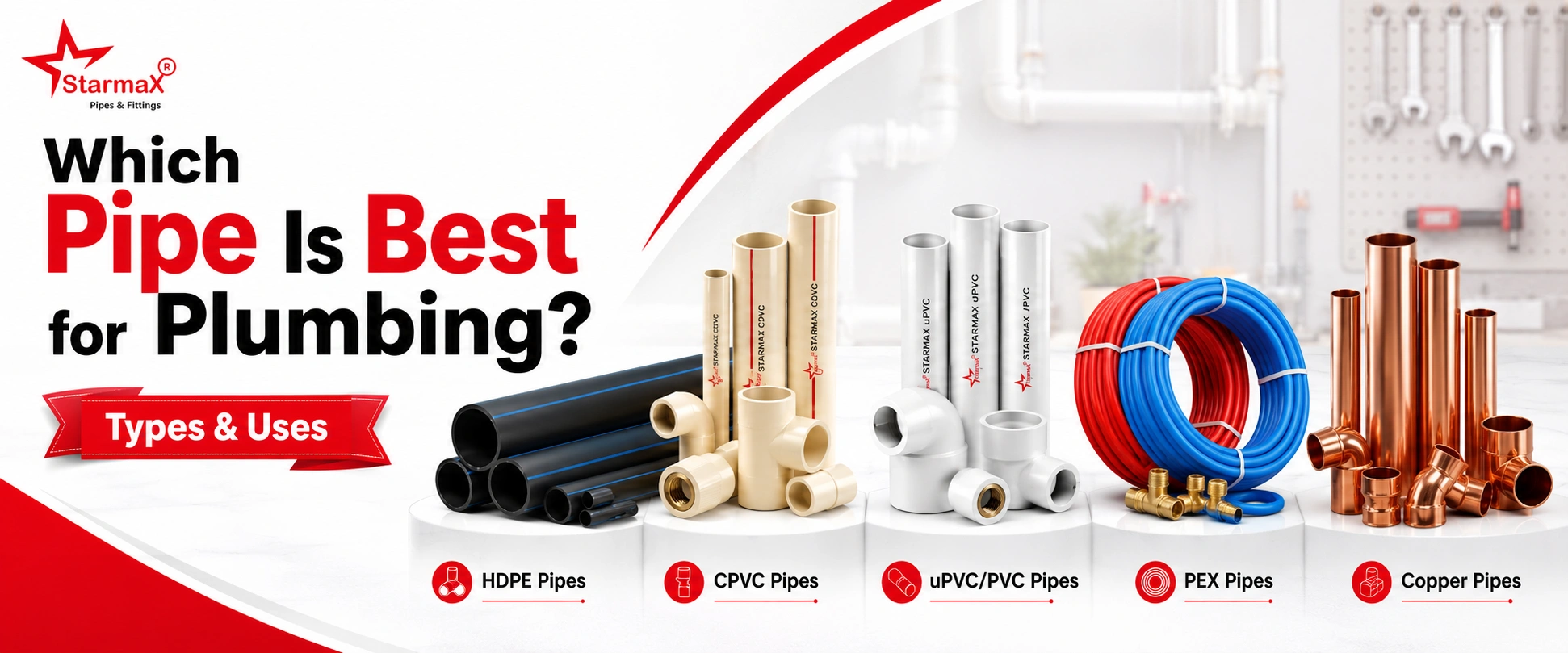
When it comes to water supply pipes in India, you will mostly come across five main types - CPVC, UPVC, PPR, HDPE, and copper. Each one has its own strengths depending on whether you need it for hot water, cold water, underground use, or indoor plumbing. Let us look at each one closely.
1. CPVC Pipes
CPVC stands for Chlorinated Polyvinyl Chloride. If you are looking for a pipe that handles both hot and cold water inside your home - this is one of the most popular and practical choices available in India right now.
The biggest advantage of CPVC is that it can handle higher water temperatures than regular PVC. It is also lightweight, does not rust or corrode, and is fairly simple to install using solvent cement joining.
Best for: Indoor residential hot and cold water plumbing
Advantages:
- Works for both hot and cold water supply
- Does not rust or corrode over time
- Light in weight and easy to carry and install
- Simple solvent cement joining - no special tools needed
- Needs very little maintenance over the years
Limitations:
- Can become brittle under certain extreme conditions
- Performance depends on the temperature and pressure rating of the product
- Must be installed exactly as per manufacturer guidelines
2. UPVC Pipes
UPVC Pipes stands for Unplasticized Polyvinyl Chloride. This is one of the most widely used pipes across India for cold water supply systems. You will find it in homes, apartments, agricultural setups, and outdoor water distribution lines everywhere.
It is rigid, strong, lightweight, and very easy to work with. The smooth inner surface also helps water flow efficiently without much friction or pressure loss.
For a reliable and budget-friendly UPVC plumbing solution, StarmaX offers a strong range suited for Indian conditions.
Best for: Cold water supply, outdoor distribution, general plumbing
Advantages:
- Very strong resistance to corrosion
- Lightweight and easy to handle on site
- Smooth inner surface supports good water flow
- Generally more economical than other options
- Easy to install and maintain
Limitations:
- Not the right choice for hot water applications
- Long term sunlight exposure should be considered during installation
- Pressure capability depends on pipe class and brand quality
3. PPR Pipes
PPR stands for Polypropylene Random Copolymer. This pipe type is commonly used in both hot and cold water plumbing systems, especially in residential and commercial buildings.
PPR pipes are joined using heat fusion - which means the joints are melted together to form one continuous, seamless connection. When done correctly this creates a very strong and leak resistant joint.
Best for: Residential and commercial hot and cold water systems
Advantages:
- Handles both hot and cold water well
- Corrosion resistant throughout its life
- Heat fused joints are very reliable when properly done
- Lightweight and easy to transport
- Smooth internal surface maintains good flow
Limitations:
- Needs proper fusion equipment and trained installation
- Thermal expansion needs to be planned for during installation
- Quality can vary significantly between brands and installation practices
4. HDPE Pipes
HDPE stands for High Density Polyethylene. This pipe is known for being flexible, tough, and excellent for underground and outdoor water supply applications. It is widely used in agricultural water lines, municipal water mains, and long outdoor pipe runs across India.
Best for: Underground water mains, agricultural supply, long outdoor runs
Advantages:
- Flexible compared to most rigid pipe types
- Excellent corrosion resistance
- Good impact resistance even under heavy loads
- Well suited for underground installations
- Fusion joints create strong leak resistant connections
Limitations:
- Requires proper equipment and trained installers for fusion joints
- Pipe must be selected to match required pressure rating
- Thermal movement should be planned for during installation
5. Copper Pipes
Copper has been used in plumbing for a very long time. It is durable, reliable, and handles both hot and cold water well. In India it is mostly used in premium residential and commercial projects where long term durability is the priority and budget is not a major constraint.
Best for: Premium residential or commercial plumbing where a metallic system is preferred
Advantages:
- Very durable with a long track record in plumbing
- Works well for both hot and cold water
- Can tolerate high water temperatures
- A well established and trusted plumbing material
Limitations:
- Usually more expensive than plastic pipe alternatives
- Requires skilled installation - not a DIY job
- Can be affected by certain water chemistries in Indian conditions
- Copper theft can be a concern in some locations
Overall each pipe type has a specific role to play. Choosing well means understanding your water system's needs - not just picking the cheapest option available in the market.
CPVC vs UPVC vs PPR vs HDPE vs Copper
Still confused about which pipe fits your situation? Here is a simple side by side look at all five options so you can compare them at a glance before making your decision.
| Pipe Type | Hot Water | Cold Water | Corrosion Resistance | Flexibility | Typical Use |
|---|---|---|---|---|---|
| CPVC | Excellent | Excellent | High | Low | Indoor residential plumbing |
| UPVC | Generally not preferred | Excellent | High | Low | Cold water distribution |
| PPR | Excellent | Excellent | High | Moderate | Hot and cold water plumbing |
| HDPE | Application dependent | Excellent | High | High | Underground and outdoor supply |
| Copper | Excellent | Excellent | Good, water dependent | Low | Premium residential and commercial |
Important note: Actual performance always depends on pipe specification, pressure class, temperature rating, water chemistry, fittings quality, and installation method. Always check the manufacturer's technical documentation before finalising your pipe selection.
Which Pipe Is Best for Drinking Water?
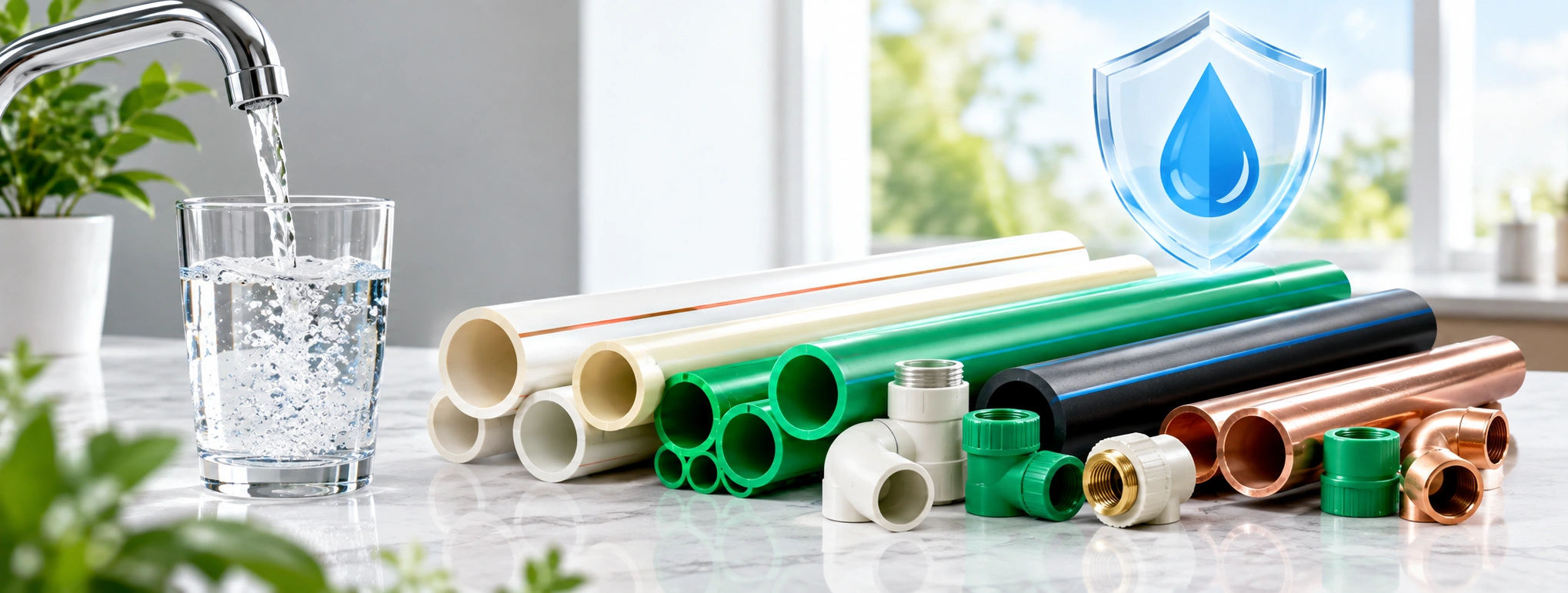
For drinking water systems the pipe material alone is not enough to consider. Every component - the pipe, fittings, joining materials, and solvent cement - should all be certified and approved for potable water use under applicable Indian standards.
For most residential drinking water applications in India, CPVC, PPR, HDPE, and properly specified copper can all be suitable options depending on whether the line carries hot or cold water, whether it runs indoors or underground, and the required pressure and temperature ratings.
One thing to always remember - never choose a pipe for drinking water based on price alone. A product made for a different application may not be safe for potable water contact.
Which Pipe Is Best for Hot Water?
For hot water plumbing lines, CPVC, PPR, and copper are the most common and reliable choices in India - provided the product you select is specifically rated for the required temperature and pressure.
UPVC is a cold water pipe. It should not be used for hot water applications without verifying the manufacturer's temperature rating first.
When choosing a hot water pipe always check:
- Maximum operating temperature rating
- Pressure rating at the intended temperature
- Manufacturer's installation requirements
- Jointing method and compatible fittings
- Thermal expansion requirements
- Applicable Indian plumbing standards
StarmaX's CPVC pipe and fitting system is specifically designed for hot and cold water plumbing in Indian homes and buildings.
Which Pipe Is Best for Underground Water Supply?
For underground water supply lines HDPE is often the strongest choice because of its flexibility, impact resistance, and excellent corrosion resistance. In some projects properly specified UPVC can also work well underground.
When selecting a pipe for underground installation always account for:
- Soil conditions and burial depth
- Traffic loading above the pipe
- Operating pressure and pipe diameter
- Temperature range and ground movement possibility
Which Pipe Is Best for Home Plumbing?
For a typical Indian home there is honestly no single winner. It depends on your specific water needs.
- CPVC - A very practical choice for most indoor hot and cold water systems
- PPR - A strong option where heat fusion installation is preferred
- UPVC - Works very well for cold water applications indoors and outdoors
- HDPE - Most useful for underground or outdoor water lines
- Copper - A durable long lasting option where higher cost is acceptable
The best pipe for your home is simply the one that matches your water requirements, uses compatible fittings, and is installed correctly by a trained plumber.
Factors to Consider Before Choosing a Water Pipe
Water Temperature
If your system carries hot water always select a pipe specifically rated for that temperature. Never assume a cold water pipe rating applies to hot water lines.
Water Pressure
Always check the pressure rating of the pipe at the actual operating temperature and installation conditions. Pressure ratings can vary significantly between products and sizes.
Pipe Size
Pipe diameter directly affects flow rate, pressure loss, and fixture performance. Do not simply match the existing pipe size without checking if water demand has changed.
Installation Location
Indoor, outdoor, underground, exposed, and concealed installations all have different requirements. Consider sunlight exposure, soil type, mechanical loads, and temperature variation.
Water Quality
Hard water, acidic water, or chemically aggressive water can affect some pipe materials over time. Always check material compatibility with your local water quality before installation.
Jointing Method
A pipe system is only as good as its joints. Whether you use solvent cement, heat fusion, mechanical fittings, or soldering - the joining method must be correct and compatible with the pipe system.
Standards and Certification
Always choose pipes that meet BIS or applicable Indian standards. For drinking water systems verify that both the pipe and fittings are approved for potable water contact.
Common Water Pipe Selection Mistakes to Avoid
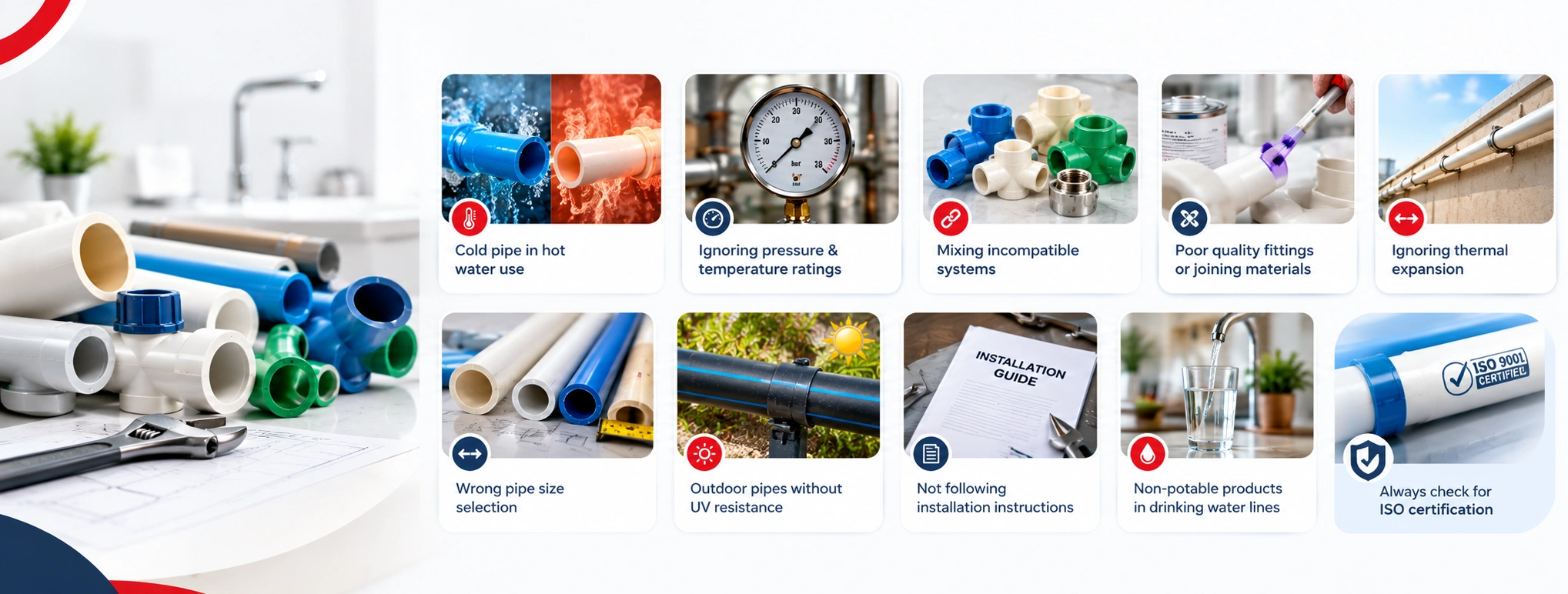
Choosing a pipe based only on price is the most common mistake Indian homeowners and contractors make. Here are other mistakes that lead to expensive problems later:
- Using a cold water pipe in a hot water application it is not rated for
- Ignoring the pressure and temperature ratings on the product
- Mixing incompatible pipe and fitting systems from different brands
- Using poor quality fittings or joining materials to save cost
- Not accounting for thermal expansion in long pipe runs
- Selecting wrong pipe size for the actual water demand
- Installing outdoor plastic pipes without checking UV resistance
- Not following the manufacturer's installation instructions carefully
- Using non-potable rated products in drinking water lines
Always verify your pipe and fittings carry proper ISO certification before purchasing — uncertified products are one of the biggest reasons plumbing systems fail early in Indian homes.
So, Which Pipe Is Best for Water Supply?
Every home and every plumbing job is different — so the best pipe is always the one that fits your need.
- For indoor hot and cold water plumbing: CPVC or PPR are excellent choices when correctly specified and installed
- For cold water supply: UPVC is the most commonly used and cost effective option
- For underground and outdoor water lines: HDPE is usually the best choice for its flexibility and durability
- For long lasting metallic plumbing: Copper is excellent where its cost and installation requirements are acceptable
So instead of only asking "which pipe is best?" - ask "which pipe is best for my specific water supply application?" Temperature, pressure, location, water quality, budget, Indian standards, and installation quality all need to be considered together.
Final Thoughts
There is no single water supply pipe that is best for every project in India. CPVC, UPVC, PPR, HDPE, and copper each have their own strengths and the right application where they perform best.
For most projects the safest approach is to select a pipe that is properly certified for its intended use, matches the required pressure and temperature conditions, uses compatible fittings, and is installed correctly by a trained professional following manufacturer guidelines and applicable Indian plumbing standards.
Whether you are choosing pipes for a brand new home, replacing an old water line, or planning an underground supply system - always think about the complete system, not just the pipe material. A correctly designed and properly installed plumbing system will always give you better performance, safer water, and longer service life than any material chosen on price alone.
Frequently Asked Questions
Q1. Which pipe is best for hot water supply in Indian homes?
CPVC is the most widely recommended pipe for hot water supply in Indian homes. It can handle higher water temperatures safely, is corrosion resistant, and works well with solvent cement fittings. Always check that the CPVC product you choose is specifically rated for the temperature and pressure of your hot water system.
Q2. Is UPVC pipe safe for drinking water supply?
Yes, UPVC pipes are non-toxic, lead free, and safe for drinking water supply when they meet the applicable BIS or Indian standards. They are widely used across India for cold water distribution in homes, apartments, and commercial buildings. Always confirm the product carries proper quality certification before purchase.
Q3. What is the difference between CPVC and UPVC pipes?
CPVC is designed for both hot and cold water and can handle higher temperatures making it ideal for indoor plumbing. UPVC is best suited for cold water supply and is generally more economical. If your system only carries cold water UPVC works well. For hot water lines CPVC is the better and safer choice.
Q4. How long do CPVC pipes last in India?
Good quality CPVC pipes from certified manufacturers can last 25 to 30 years or more with proper installation and maintenance. The actual service life depends on water quality, operating temperature and pressure, installation quality, and whether the correct fittings and solvent cement were used.
Q5. Which pipe is best for underground water supply in India?
HDPE pipes are generally the best choice for underground water supply in India because of their flexibility, strong impact resistance, and excellent corrosion resistance. For smaller underground runs in residential projects properly specified UPVC pipes can also work well depending on soil conditions, burial depth, and operating pressure.

Related Blog
WHY STARMAX ?
MAKE IN INDIA- BEST QUALITY PRODUCTS UNDER THE MISSION MAKE IN INDIA
BEST QUALITY PRODUCTS- All products are certified and manufactured as per ASTM standards.
HIGHEST SATISFACTION We assure the customers for 100% statisfaction in terms of price and quality
BEST BUSINESS STANDARDS- we have the mission of providings the products in best business standards i.e.
Free! Get A Quote

"Starmax" is a brand launched by "Naira Group" offering a wide range of CPVC & UPVC pipes and fittings. We are based in India ka Dil- Dilli CHAWRI BAZAR (Delhi).
Our Product
CPVC Pipes and Fittings UPVC Pipes PTMT Taps UPVC Fitting System PVC Plastic Tap Solvent Cement Clampes BrochureContact Us
Mr. Sumit Gupta
Address
3348/1, Gali Peepal Mahadev, Chawri Bazar, Delhi-110006
© 2026 Starmax Pipes. All Rights Reserved.
