Loading...
PVC vs. UPVC Pipes: Key Differences, Benefits & Best Use Cases
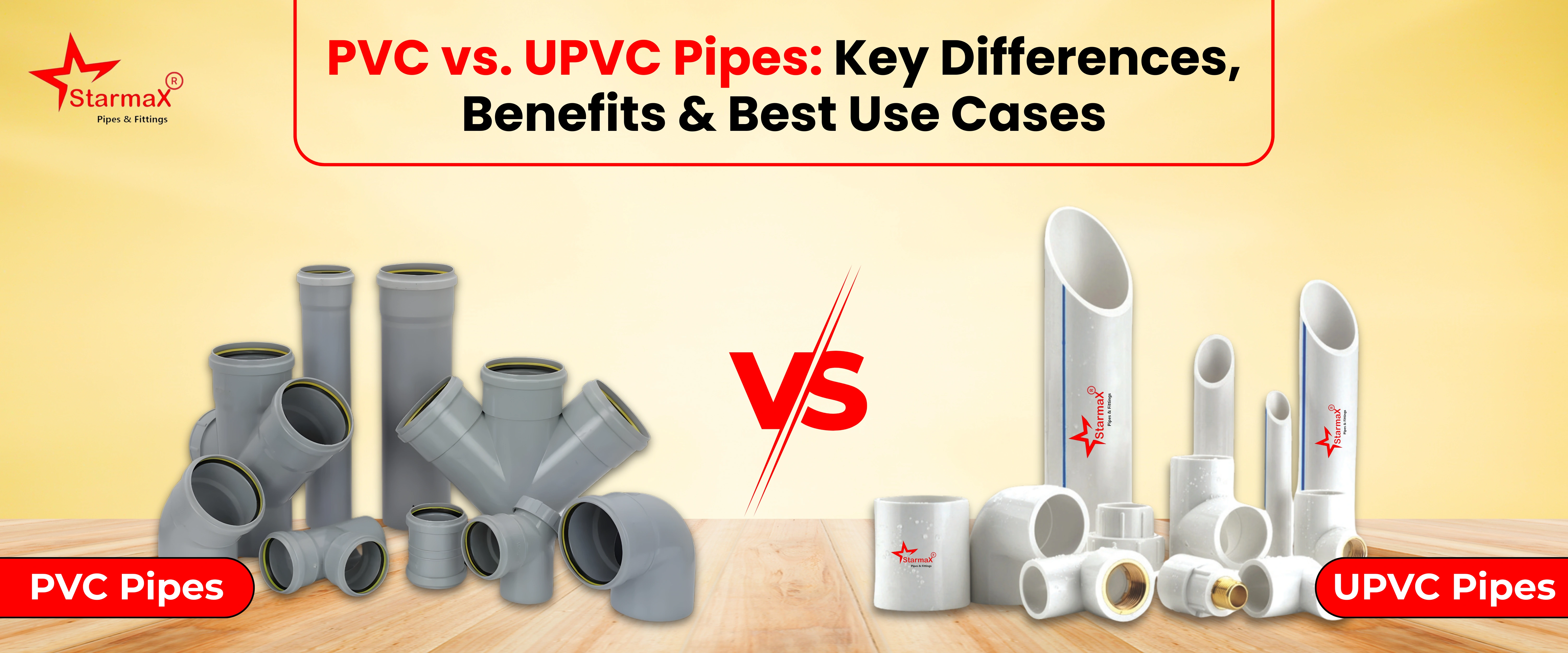
When planning plumbing, construction, installation, or general manufacturing, you may have heard of two terms: PVC and UPVC. While they sound similar, they are totally different. Choosing the wrong material for your plumbing can impact your entire plumbing system. PVC and UPVCboth drive from the same base polymer, which is polyvinylchloride. They might remain similar according to the chemical but hold different characteristics.
PVC pipes are commonly used in non-pressure systems. While UPVC pipes are highly demanded in high-pressure systems. If you are confused, which material is good for which application, we bring a blog which is focused on exactly UPVC and PVC, their features, the difference between PVC and UPVC pipes, and which material is best for which application.
What are PVC Pipes?
PVC stands for polyvinylchloride. It is a synthetic plastic polymer. It contains plasticisers (commonly phthalates), substances which are added to make the material more flexible and easier to shape. This process makes PVC reliable, durable and easier to shape at room temperature. PVC Pipes materials are widely used in residential plumbing systems, including drainage, irrigation, and cold water supply systems.
Key Characteristics of PVC
- Soft and flexible due to plasticisers
- Easier to bend, cut, and shape
- Suitable for applications where flexibility is required
PVC’s flexibility makes it a good choice in areas like electrical insulation, hoses, and consumer products where rigid strength is not a priority.
What is UPVC Pipes?
UPVC stands for Unplasticized Polyvinyl Chloride. During the production of UPVC pipes or fittings, there are no added plasticisers, which makes it a more rigid and highly stable material. UPVC is able to hold high-pressure applications and is highly used in industries like high-pressure water supply, sewage systems, etc. When there is a requirement for strength with a long lifespan, UPVC pipesare used.
Key Characteristics of UPVC
- Rigid and strong due to the absence of plasticisers.
- Does not bend easily; it requires heat for reshaping.
- Suitable for applications requiring structural integrity.
UPVC’s rigidity and weather resistance make it the first choice for windows, doors, and exterior plumbing where long-term durability is essential.
Difference Between PVC and UPVC Pipes
Here is the key difference between PVC and UPVC-
| Property / Feature | PVC Pipes (Plasticised) | uPVC Pipes (Unplasticized) |
|---|---|---|
| Composition & Core Property | Contains plasticisers (e.g., phthalates) for flexibility and bendability. | Contains no plasticisers, resulting in a rigid and firm structure. |
| Structural Strength & Durability | Moderate; can deform under sustained pressure. Not for primary load-bearing. Lifespan: ~20-30 years. | High strength; withstands stress and high pressure. Lifespan: ~30-50+ years. |
| Temperature & Fire Performance | Handles temperatures to 60°C; softens at high heat. Flame-retardant, but emits more smoke when burning. | Handles temps up to 80°C; maintains rigidity. Flame-retardant with better resistance, less smoke. |
| Chemical & Environmental Impact | Good chemical resistance, but plasticisers leach. Recycling is complex due to additives. | Excellent chemical resistance, safe for potable water. Easier to recycle; more eco-friendly. |
| Weather & UV Resistance | Lower resistance; degrades and becomes brittle outdoors. | Excellent resistance to UV, rain, and weathering for long-term outdoor use. |
| Flow Efficiency & Installation | Moderate flow; internal friction possible. Easier to cut and install in tight, curved spaces due to flexibility. | Smooth internal surface for better flow, less scaling. Rigid; requires precise planning and more fittings for turns. |
| Thermal & Acoustic Insulation | Poor insulator of temperature and sound. | Good thermal insulator (improves energy efficiency). Good sound-dampening properties. |
| Maintenance & Cost | Lower upfront cost. May require more inspection and care. | Higher upfront cost. Very low maintenance; easy to clean and durable. |
| Primary Applications | Flexible pipework, drainage, irrigation, electrical conduit, cables, hoses, non-potable systems, and inflatables. | Main water supply, pressure pipes, sewage mains, chemical transport, window/door frames, siding, and rigid electrical conduit. |
| Weight & Handling | Lightweight and easy to manoeuvre, coil, and transport. | Heavier per length, requiring more support and careful handling during installation. |
Advantages of PVC Pipes
There are a lot of advantages to using PVC. Here are several valuable characteristics of PVC.
- Flexibility:As PVC contains plasticisers, which make it softer and bendable. Perfect for using plumbing and electrical framework.
- Cost-effective:PVC is generally cheaper than UPVC. It is cost-effective to use in a simple process.
- Lightweight:PVC fittings and pipes are lightweight, which makes them easy to transport and easy to install in the application.
- Versatility:PVC is versatile to use because it is easy to mold into various shapes. Perfect for flooring, pipe, and consumer goods
- Resistance-Corrosion:PVC has corrosion resistance. It does not degrade like a metal and is perfect for water pipelines.
Advantages of UPVC Pipes
UPVC is a superior choice when there is a demand for strength and longevity. Here is its valuable advantage of UPVC-
- High durability and rigidity:UPVC is strong and resistant to deformation, moisture, and mechanical stress, etc.
- Weather and UV resistance:It is not like PVC. UPVC resists fading, warping, and corrosion when exposed to the sun or rain. Perfect to use outdoors.
- Low Maintenance:UPVC fitting does not require frequent repairs or repairs. It is low maintenance and works for years.
- Energy efficiency:UPVC gives excellent thermal insulation, which keeps it warmer in winter and cooler in summer.
- Chemical and corrosion resistance:Performed well in various chemicals, acids, or corrosive environments, without getting contaminated.
- More eco-friendly: UPVC fittingsdo not contain plasticisers and have a long lifespan, which is eco-friendly and environmentally friendly.
When choosing pipes for your plumbing or construction project, understanding the Difference Between CPVC and UPVC for the Best Choiceis crucial. CPVC pipes are designed for hot water and high-pressure applications, offering durability and heat resistance.
Application of uPVC and PVC
PVC (Polyvinyl Chloride) and UPVC (Unplasticized Polyvinyl Chloride) are among the most widely used plastic materials in construction, plumbing, and industrial sectors. While they originate from the same base polymer, their applications differ significantly due to flexibility, strength, and temperature resistance. Selecting a material is all about using it in the right location.
Primary Uses of uPVC Pipes
- Windows & Doors:Superior thermal insulation, soundproofing, & security with energy-efficient UPVC framed doors & windows.
- Outside Plumbing & Drainage:Due to strength and corrosion resistance, this type of PEX is preferred in main line sewer connections, sewer pipes, and rain gutters.
- Exterior Cladding & Siding: Functions as a tough, waterproof, and maintenance-free exterior covering for a building.
Primary Uses of PVC Pipes
- Electrical Conduits & Cable Insulation: The flexibility and insulation capacity of this product make it ideal for protecting electrical wires.
- Indoor Plumbing Pipes:Usually used for household water supply lines and vent pipes.
- Medical Devices & Flooring:Flexible PVC is used in blood packs, tubes, and soft, durable floors.
- Consumer Goods:Ranges from shower curtains and inflatable products to garden hoses and synthetic leathers.
Choose the Right Material: UPVC & PVC Pipes?
Choosing the right material from UPVC & PVC depends on what you need the material for, according to the project requirement.
Choose UPVC PipesIf Your Project Requires:
- Structural strength and rigidity (window frames, doors, heavy-duty pipes).
- Long-term outdoor exposure (exterior windows, siding, rainwater systems).
- High energy efficiency and thermal insulation.
- A "fit-and-forget," zero-maintenance solution.
Choose PVC PipesIf Your Project Requires:
- Flexibility and bendability (wiring, plumbing in tight spaces, inflatables).
- A cost-effective solution for non-structural, indoor applications (interior pipes, flooring).
- Specific softness or pliability (medical tubing, vinyl records).
Remember, the price difference between PVC and UPVC varies.
Also Read: CPVC vs UPVC Pipes: Key Differences Between Them
Conclusion
It is confusing to choose material for modern construction, plumbing and manufacturing. Yes, PVC or UPVCboth come with the same base, but have different roles. It gives different performance characteristics that make it suitable for specific use.
By understanding their key features, benefits and ideal application, you can choose the right material. Make an informed decision by considering the safety, longevity and cost effectiveness of your project. Get high-quality PVC and UPVC pipes at Starmax Pipe & Fitting.
At Starmax Pipe & Fitting, we provide a wide range of UPVC & PVC pipe fittings. We are a well-known pipe and fitting company in India because we are committed to providing stronger and more reliable products, which last for years.
Frequently Asked Questions
What is the difference between UPVC and PVC?
PVC contains plasticisers, which make it flexible, whereas UPVC is a firmer material, which makes it long-lasting and rigid.
Which one is better for outdoor use, between PVC and UPVC?
UPVC is best used for outdoor applications. UPVC holds sun and UV resistance properties, which make it ideal.
For my home drinking water supply, which material is best?
For a drinking water pipeline, you should opt for UPVC. It is strong, safe and doesn’t affect the taste of water, suitable for drainage and irrigation.
Is UPVC more expensive than PVC?
Yes, UPVC is more expensive than PVC. PVC usually costs less upfront, but UPVC comes with longer-lasting and low-maintenance features. It is worth it to spend more on UPVC pipes.
Can I paint your PVC and UPVC pipes?
You can paint both, but UPVC rarely needs it. If you paint PVC or UPVC, you must use a special primer and paint made for plastic, or it will peel off.
Does UPVC product need high maintenance?
No, UPVC pipe does not require high maintenance. It comes with low maintenance and does not require frequent repairs or replacement.
Related Blog
WHY STARMAX ?
MAKE IN INDIA- BEST QUALITY PRODUCTS UNDER THE MISSION MAKE IN INDIA
BEST QUALITY PRODUCTS- All products are certified and manufactured as per ASTM standards.
HIGHEST SATISFACTION We assure the customers for 100% statisfaction in terms of price and quality
BEST BUSINESS STANDARDS- we have the mission of providings the products in best business standards i.e.
Free! Get A Quote

"Starmax" is a brand launched by "Naira Group" offering a wide range of CPVC & UPVC pipes and fittings. We are based in India ka Dil- Dilli CHAWRI BAZAR (Delhi).
Our Product
CPVC Pipes and Fittings UPVC Pipes PTMT Taps UPVC Fitting System PVC Plastic Tap Solvent Cement Clampes BrochureContact Us
Mr. Sumit Gupta
Address
3348/1, Gali Peepal Mahadev, Chawri Bazar, Delhi-110006
© 2026 Starmax Pipes. All Rights Reserved.
